John Zabawa: The Sky Between UsFeb 26 – Mar 1, 2026
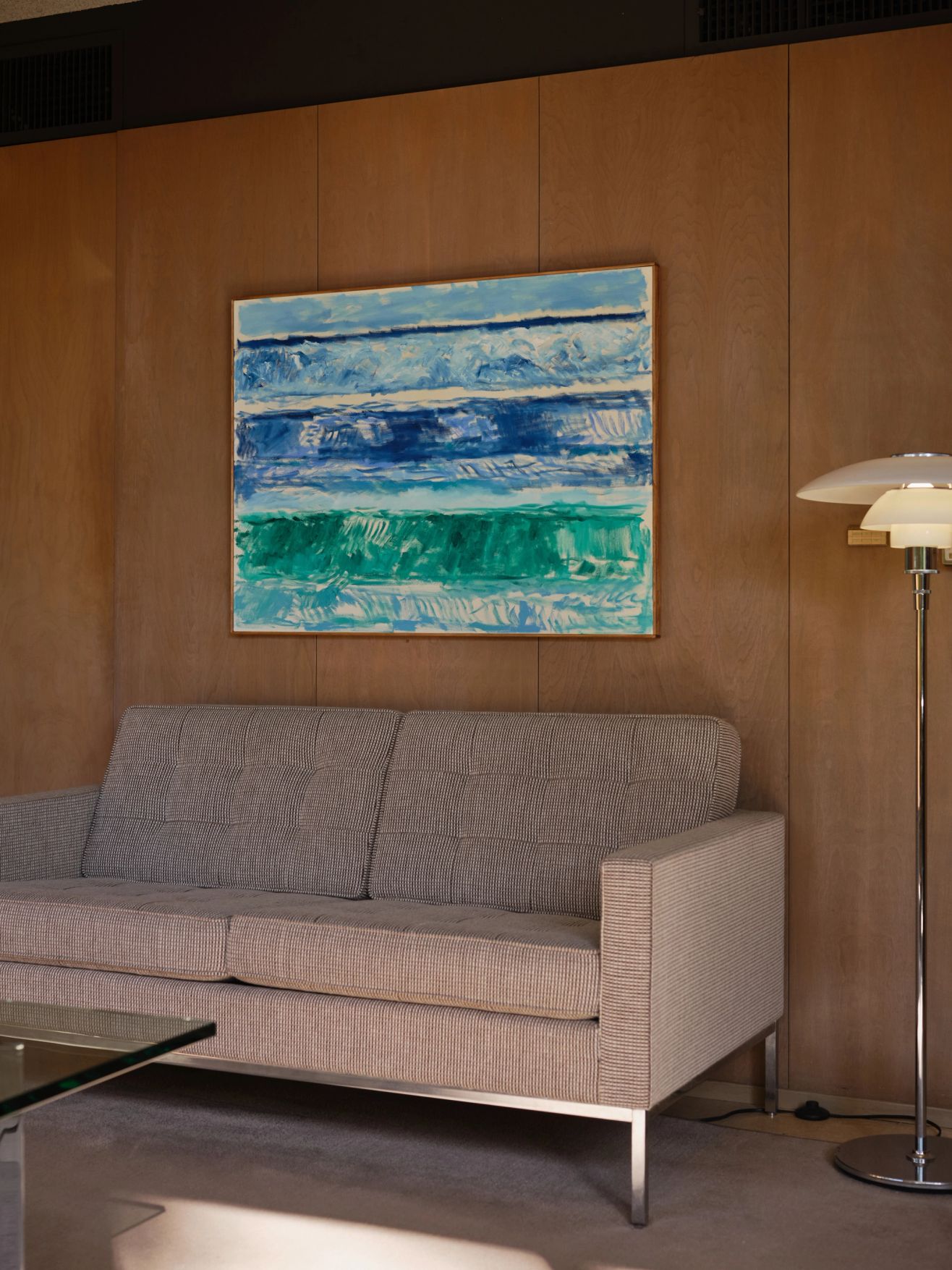
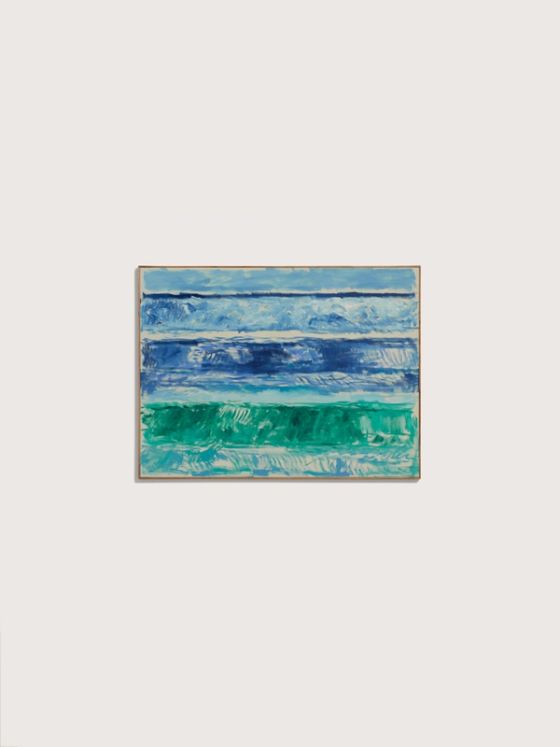
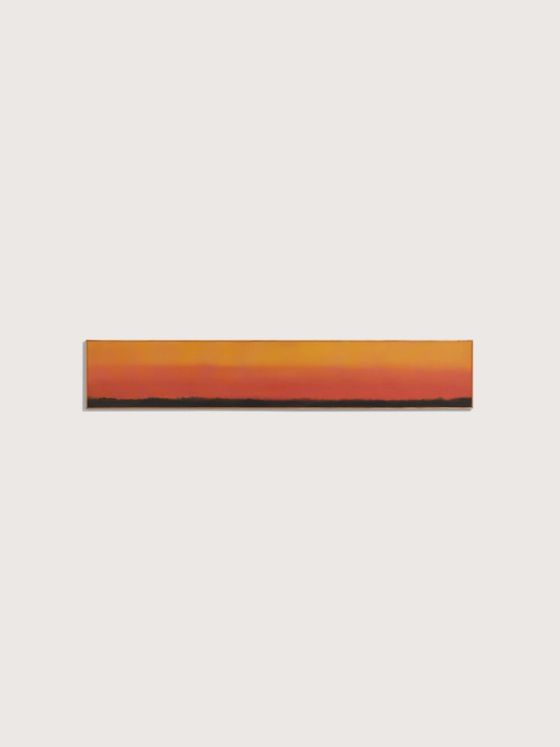
There is an oft-told story of a doctor traveling through a blizzard on the Arctic tundra with an Inuit guide. In the icy, impenetrable night, the doctor cries out that they are lost, to which his guide responds simply, “We are not lost. We are here.” John Zabawa’s paintings of white-whipped waves cresting over rocky outcrops, rivulets of seawater streaming into limpid tide pools, welcome viewers into a similar immediacy. The resounding crash, the fine net of spindrift, the salt announcing itself, just then, on the back of the tongue, are all present. Like haikus, his pared-back colors and contours distill phenomena into their most essential elements. Can the sound of a wave not conjure the entire sea?
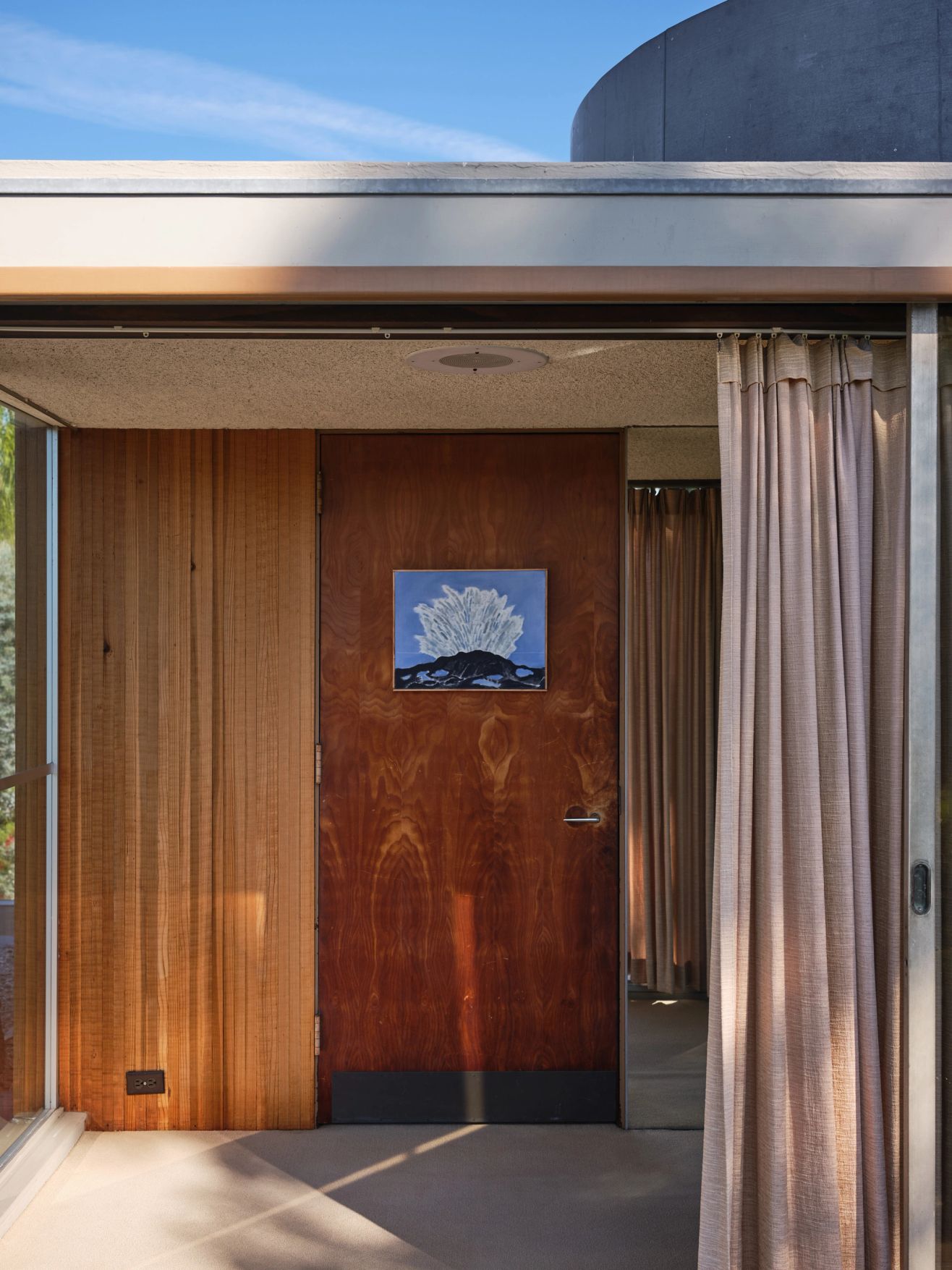
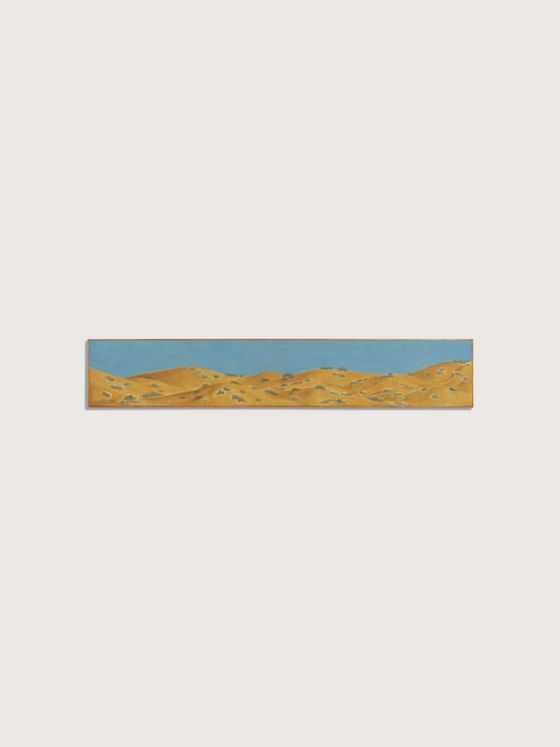
Presence and place converge in Zabawa’s third showing with Francis Gallery—specifically, Los Angeles, where the artist has lived and worked for the past eight years. In the feathery fan of white water framed by a rusted, sunburnt sky, it is easy to find yourself along the coastal cliffs just north of the city. Attention to the way foam marbles the receding tide, or how water-slicked rocks refract sunlight, crystallizes fleeting perceptions. Elsewhere, standing before one of his saffron-colored landscapes—hillsides tufted with ragged grasses—it’s possible to feel the arid Santa Anas rushing up the slopes of the San Gabriel Mountains. Where the cerulean blue sky meets the sepia-tinged land, something electric ignites.
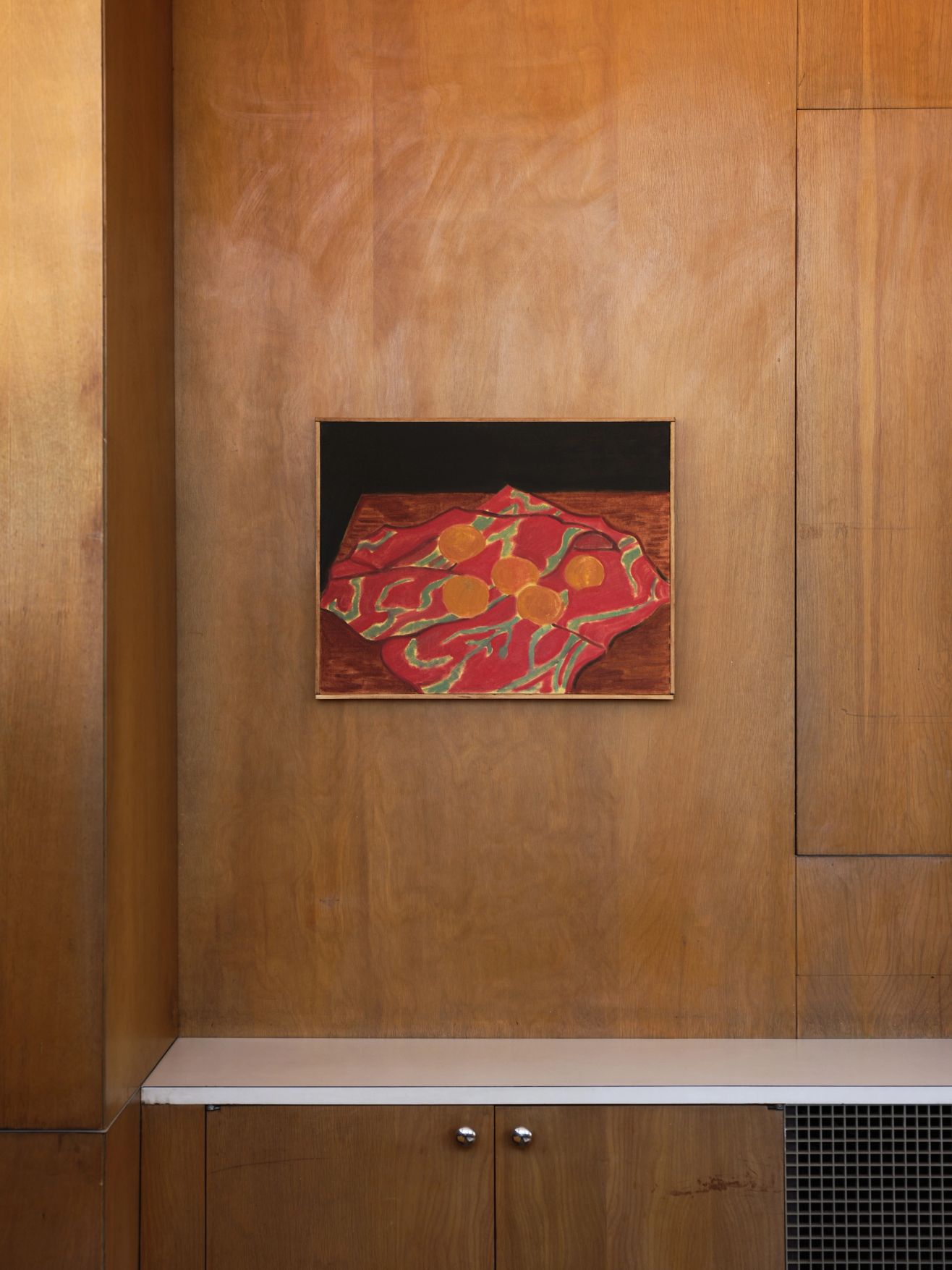
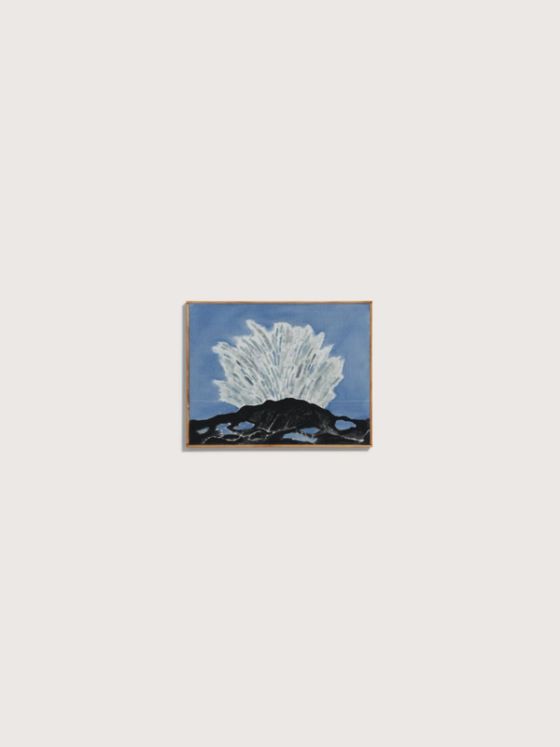
That same California light washes over Zabawa’s tenderly rendered still lifes and interiors. Five clementines arranged on a rumpled red cloth appear warm to the touch, as if left out for hours, now glowing in the last orange light of the day. In others, the crisp, clean morning light strips lemons bare; white envelopes catch the glare. Fruit recurs throughout his oeuvre. To these familiar forms, he entrusts intimacies—familial relationships, childhood memories—translating feelings at once personal and universal into sensuous systems of color and light.
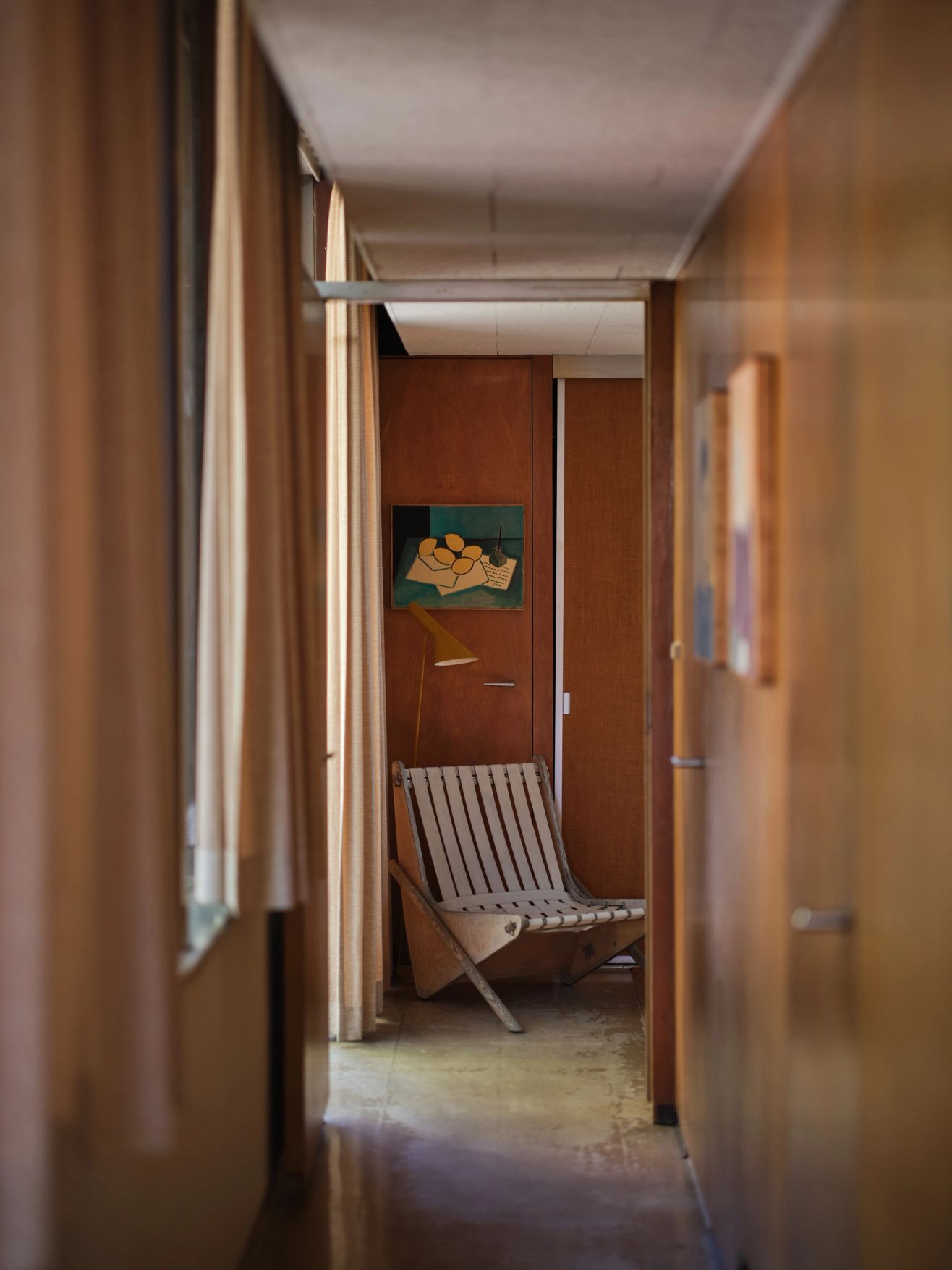
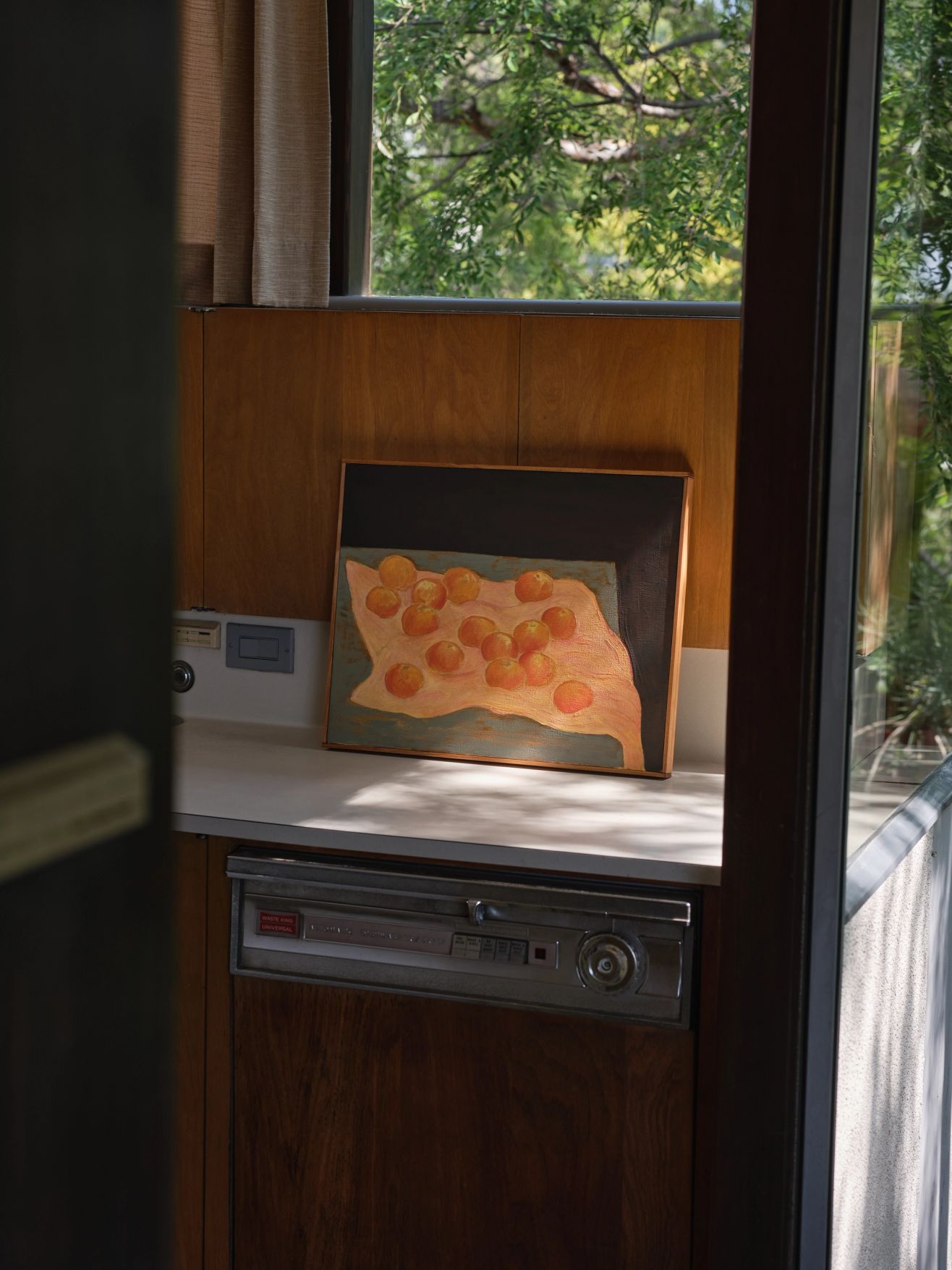
In some compositions, his use of line is stark and economical; a single brown swoosh defines a circle, two curves cut an oval. Nearly flat planes of faded red, orange, and yellow arrayed atop a white-footed base invoke without intimating reality. The purified shapes recall Matisse’s simplified apples and pears. In still others, scratchy brushstrokes suggestive of volume and careful modulations of shadow lend spills of mandarins a material density closer to Cézanne’s restless, smoldering orbs. Part of the thrill of Zabawa’s work lies in his willingness to play, to approach each canvas anew in his search for what resists definition. As another painter of innovative still lifes, Georges Braque, once observed: “If there is no mystery, then there is no poetry, the quality I value above all else in art.”
That sense of mystery animates Zabawa’s recent series of oneiric interiors, in which abstracted geometric planes merge to suggest doors, hallways, tables, and chairs. Hard edges meet soft, muddy gestures, while passages of opaque paint run alongside translucent washes of color, producing an optical shiftiness where the room appears either on the verge of formation or dissolution. Within one composition, a miniature still life—a picture nested within the picture—features a cylindrical vase with eucalyptus stems fanning outward not unlike the earlier waves. Beside it, a mint green rectangle labeled haiku resting on a brown surface nods to the artist’s sustained interest in arriving at the essence of things.
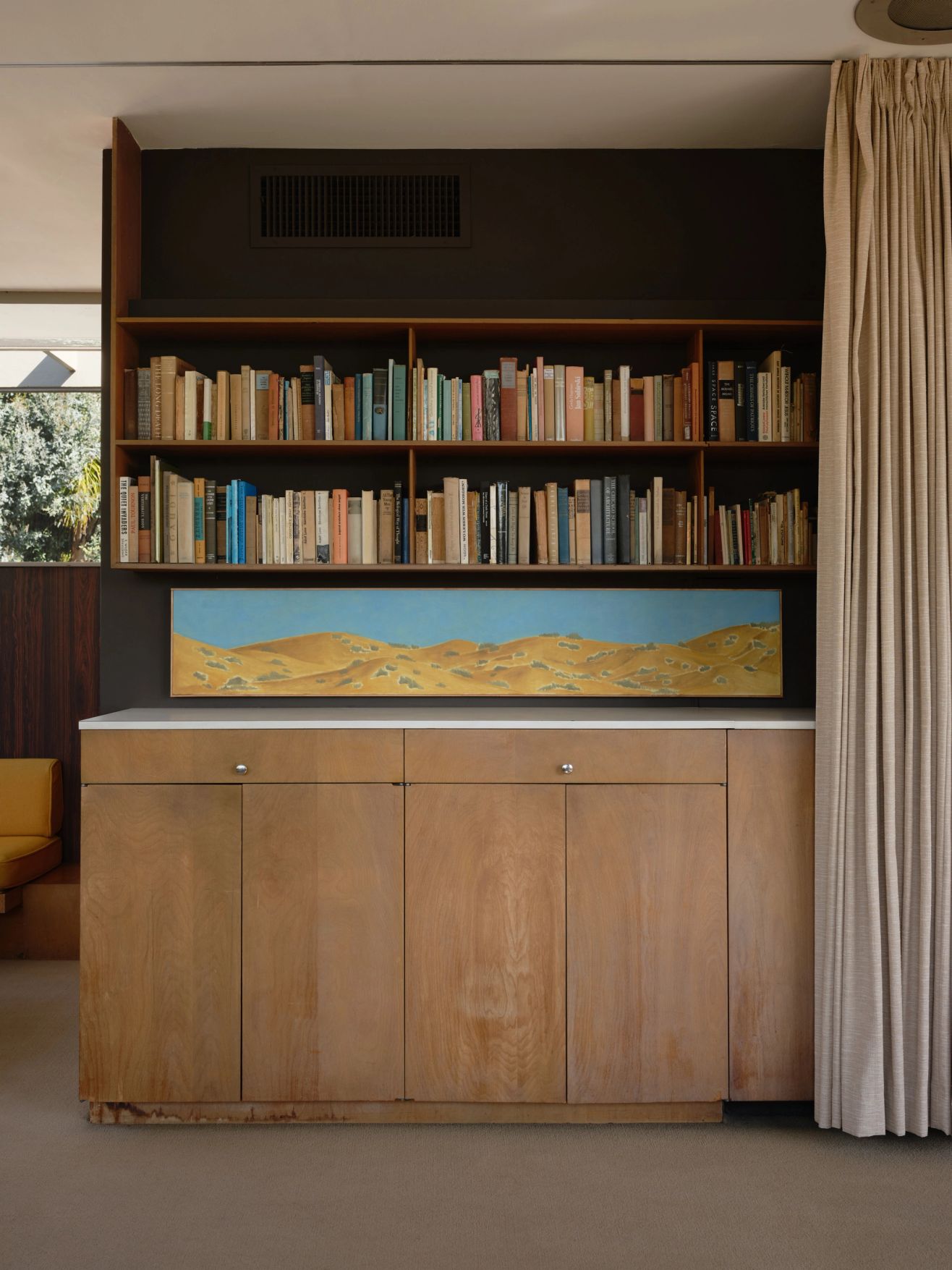
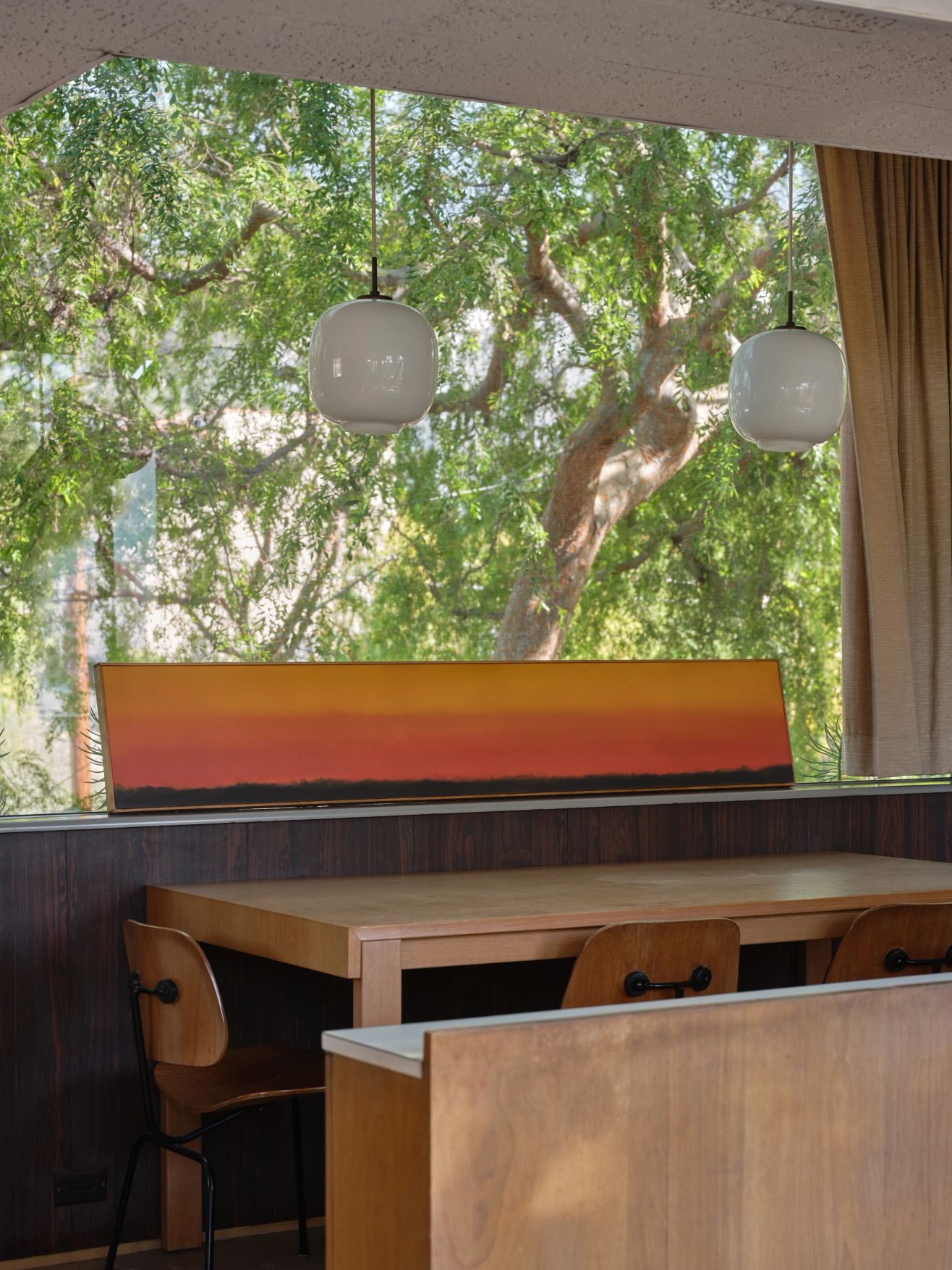
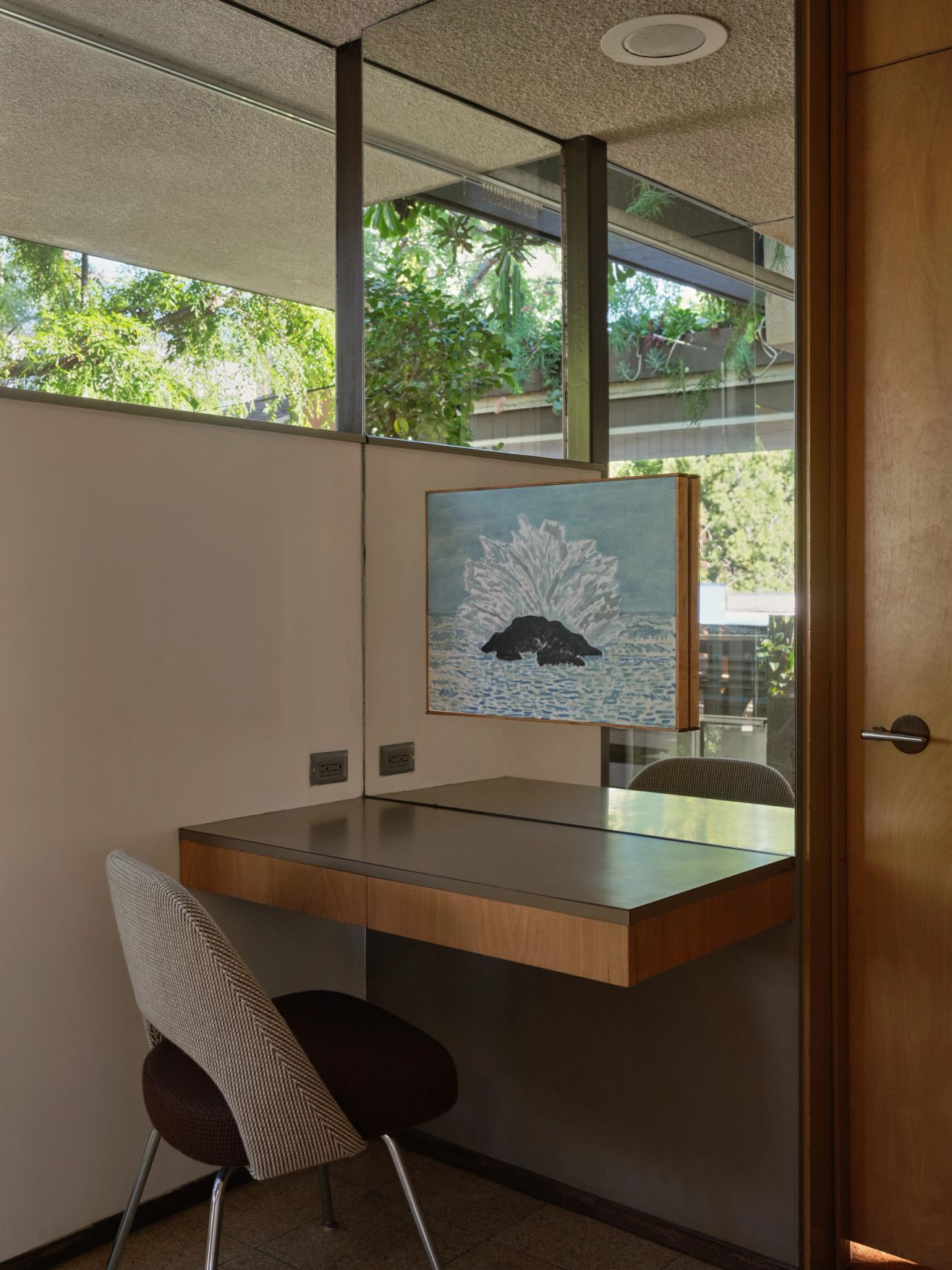
These scenes register less as inhabitable interiors than as images of interiority: spaces shaped as much by memory and impression as by architecture. The physical layout and material makeup of the rooms never fully cohere. Narrative gives way to atmosphere and the accumulation of color, gesture, and the viewer’s own projections. Thin layers of steel and cornflower blue, along with muted gold-flecked coral, complicate any fixed sense of time, producing a feeling of suspension rather than chronology. Zabawa’s talent for rhyming colors across temperatures and saturations manifests in pairings that render hues more resolutely themselves, blues more blue, greens more green. See: cobalt and salmon, rufous and teal.
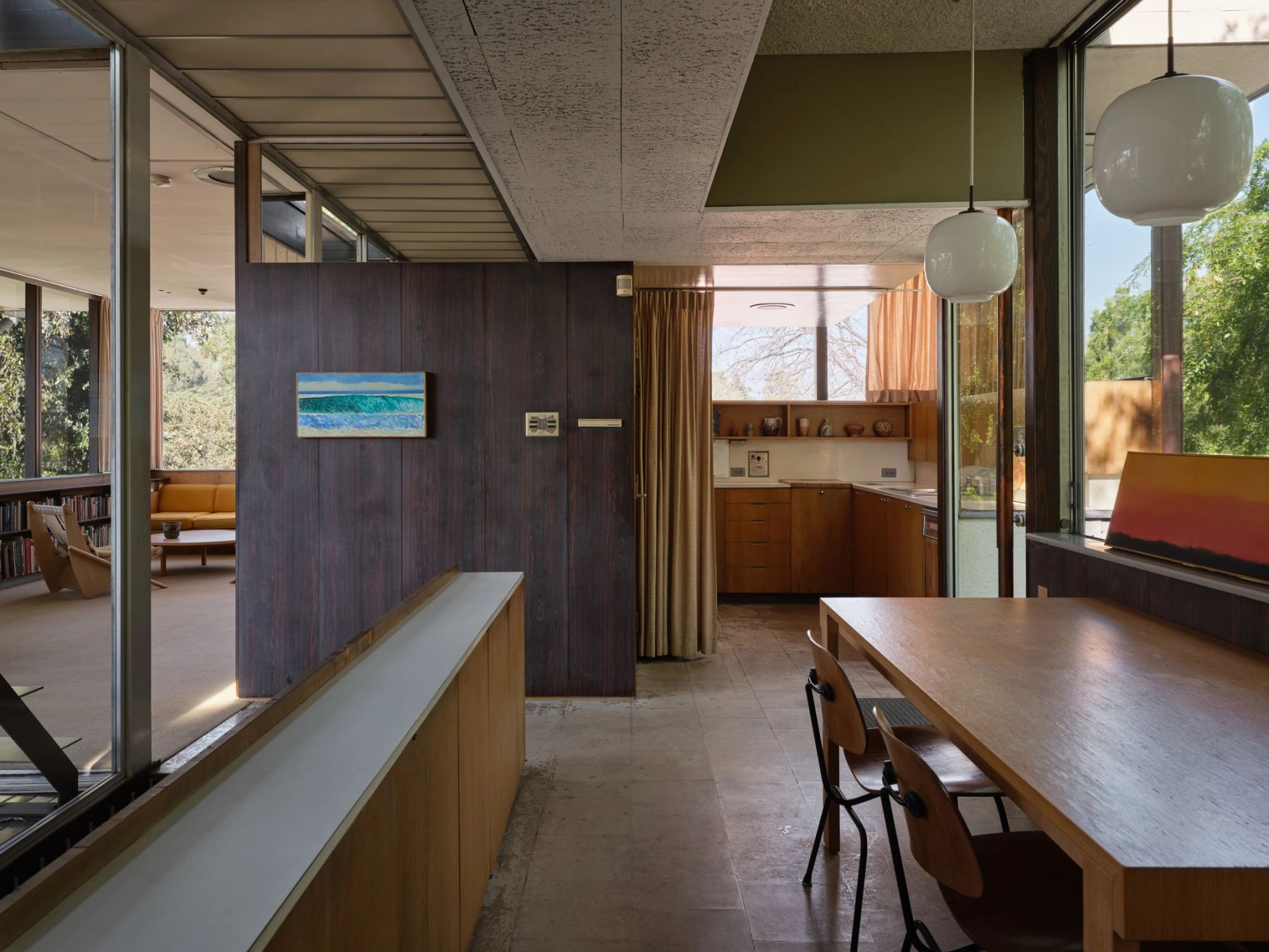
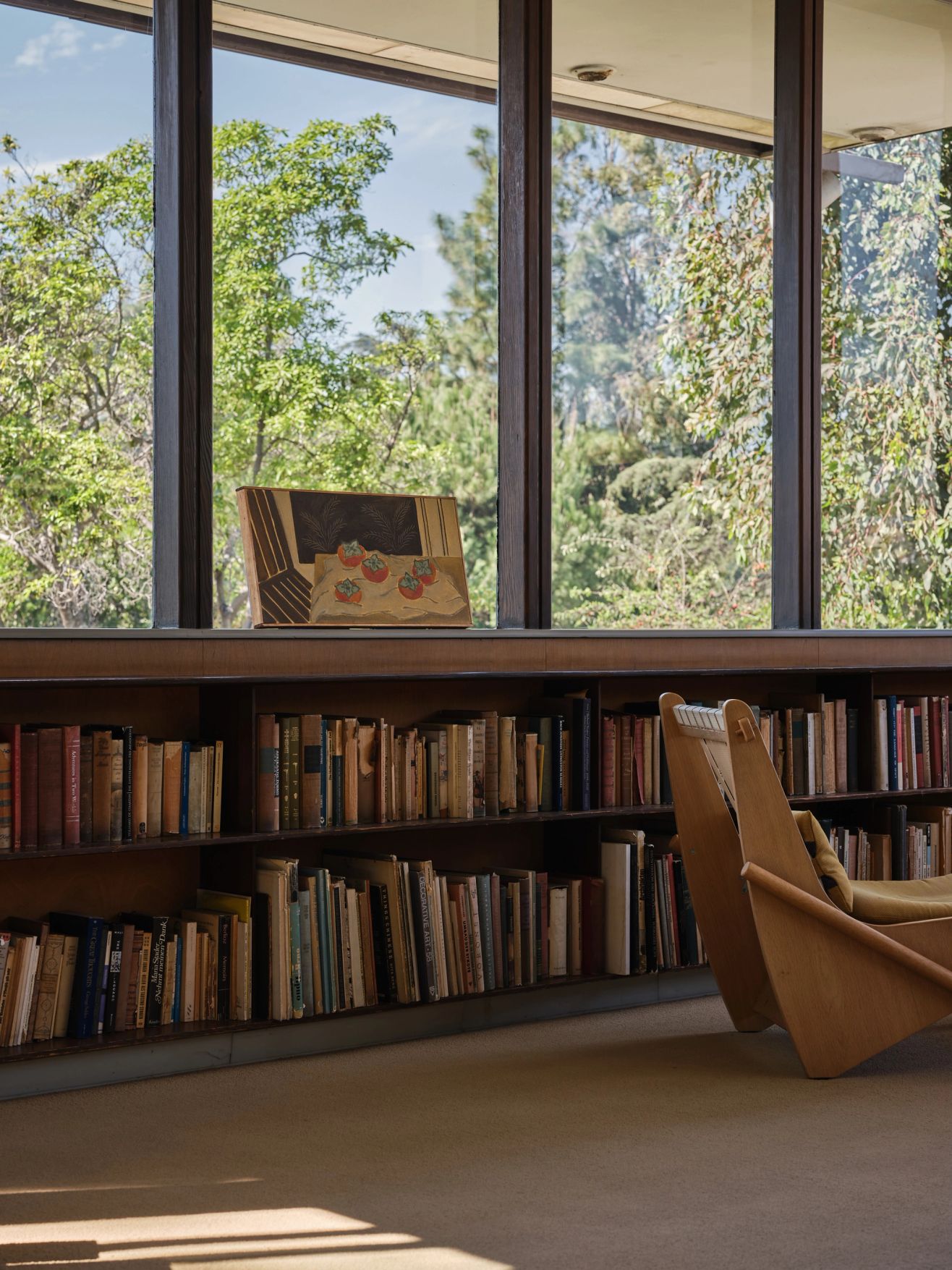
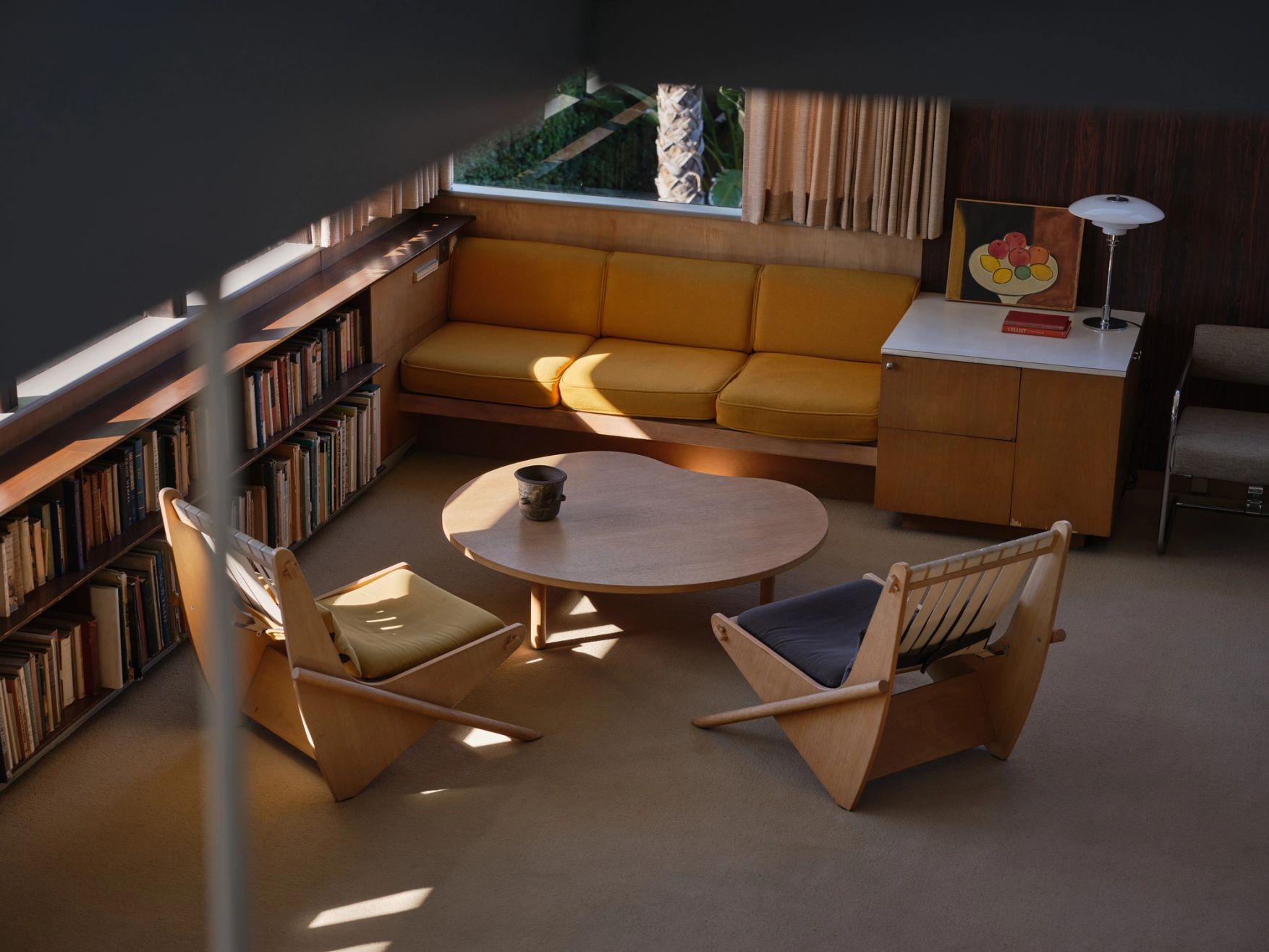
The instability of these interiors finds unexpected kinship with Richard Neutra’s VDL Research House. Though the modernist structure appears rigorously engineered—geometric lines, hard angles, carefully aligned panes of glass—it shares with Zabawa’s vision a fundamental permeability. As Neutra’s architecture dissolves the boundary between interior and exterior, Zabawa’s painted rooms refuse fixity, existing somewhere between memory and material, the facts of a room and the emotions it conjures. Here, the ever-changing light of Los Angeles casts through the windows and painted surfaces alike, closing further the distance separating art and life.
Across coastlines, still lifes, and interiors, Zabawa’s work returns again and again to this condition of presence. What matters is not arrival or even recognition, but attention, being here, long enough to notice how color and light hold a moment before it slips away.
Words
- Tara Anne Dalbow
Photos
- Erik Benjamins
Featured works
 LA Gallery
John ZabawaLost Hills, 2026
 LA Gallery
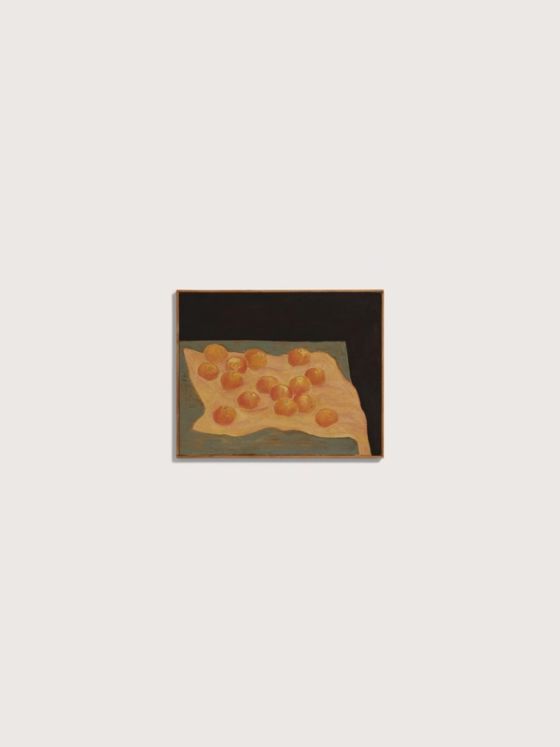
John ZabawaZuma, 2026
 LA Gallery
John ZabawaMandarins on Table, 2026
 LA Gallery
John ZabawaWave in Blue, 2026
 LA Gallery
John ZabawaAbove Sequoia, 2026
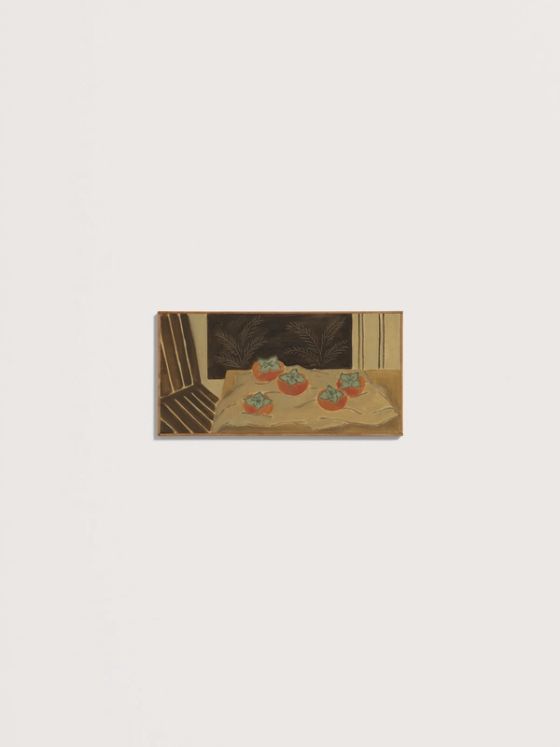
 LA Gallery
John ZabawaPersimmons at Dusk, 2026
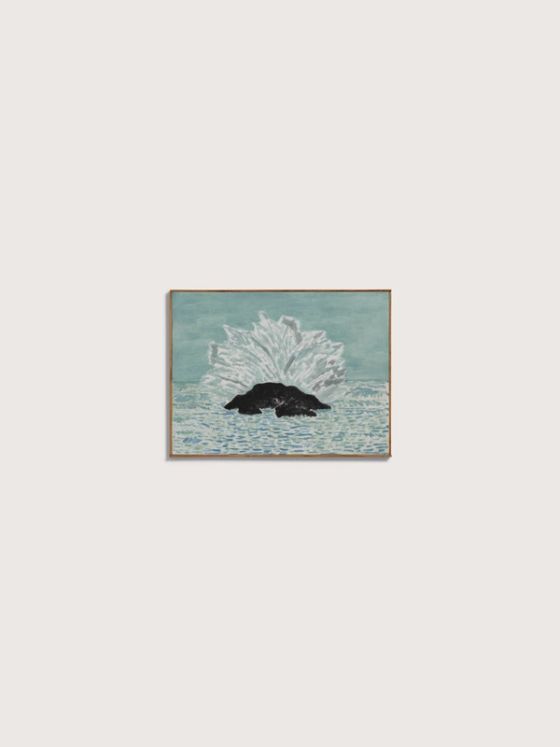
 LA Gallery
John ZabawaSea View, 2026
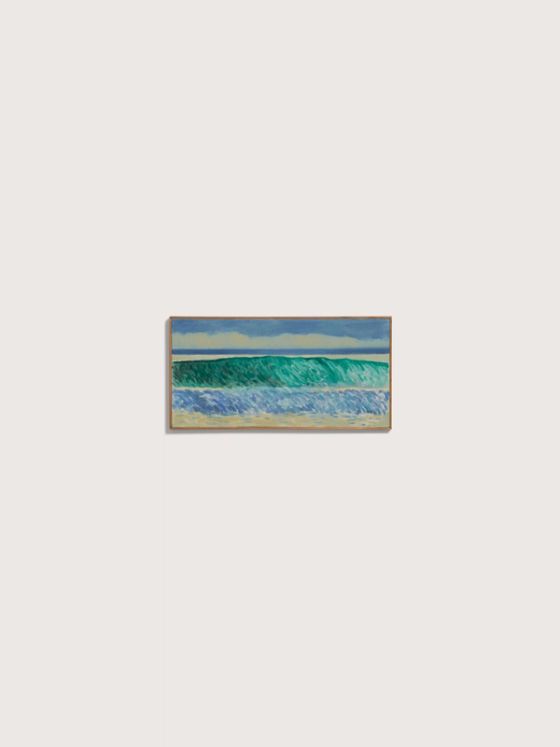
 LA Gallery
John ZabawaWaves, 2026
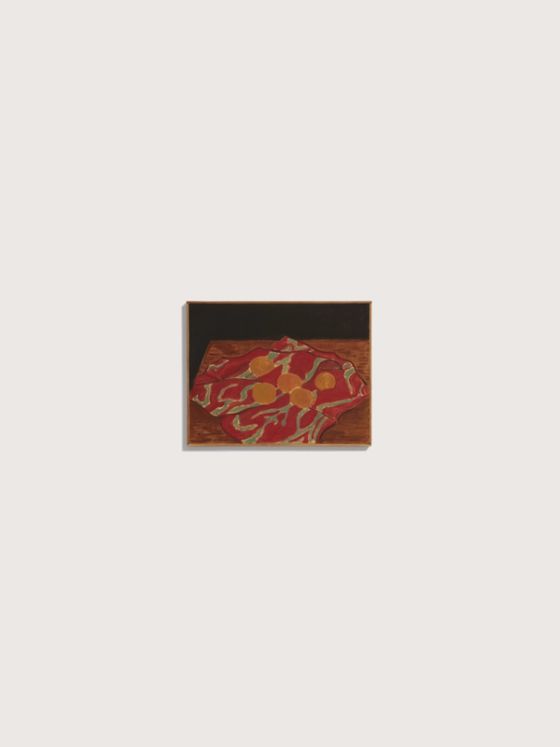
 LA Gallery
John ZabawaThe Wrapping Cloth, 2026
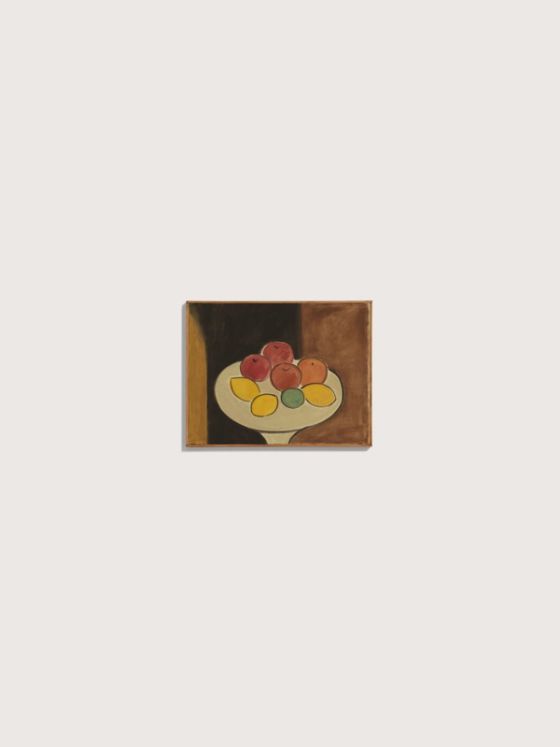
 LA Gallery
John ZabawaNatura Morte, 2026
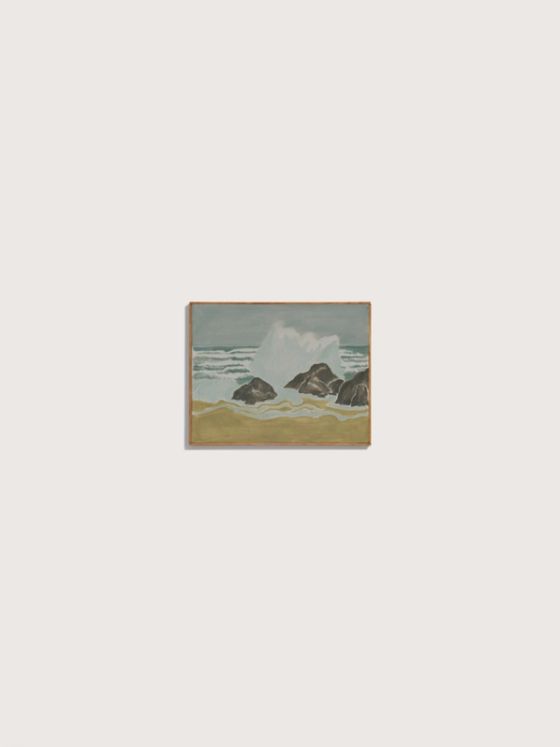
 LA Gallery
John ZabawaShoreline at Matador, 2026
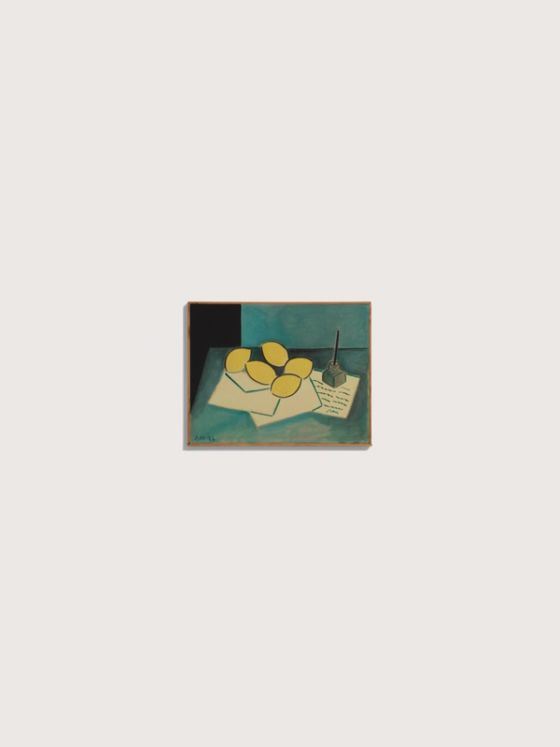
 LA Gallery
John ZabawaLetters and Lemons, 2026
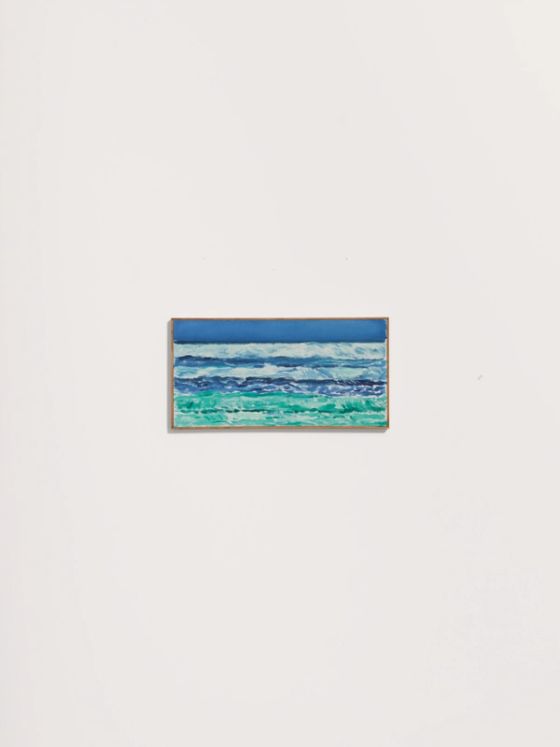
 LA Gallery
John ZabawaBreaking Waves, 2026
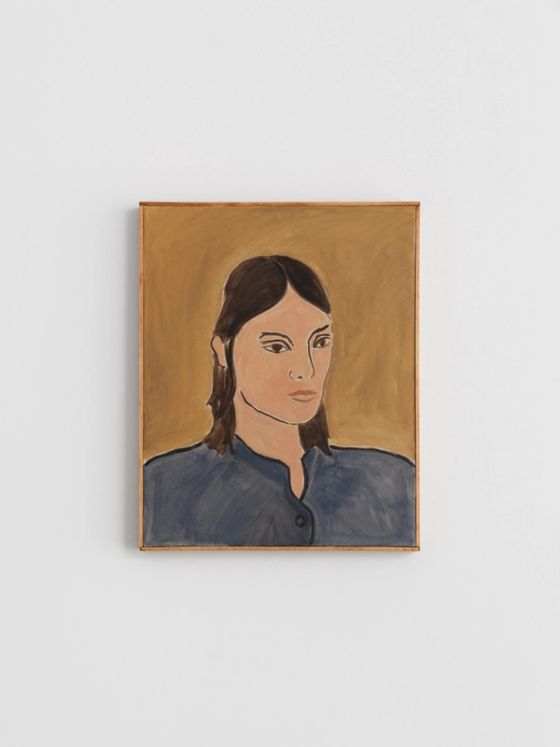
 LA Gallery
John ZabawaSelf Portrait, 2024
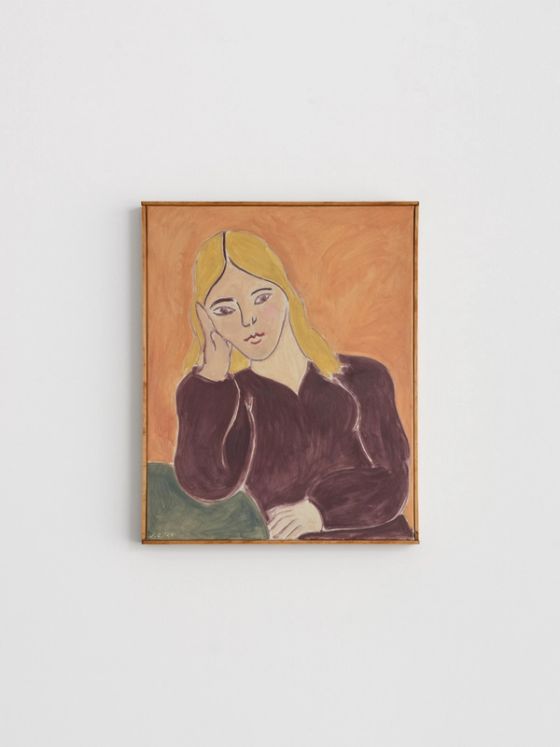
 LA Gallery
John ZabawaL.A. Woman, 2024
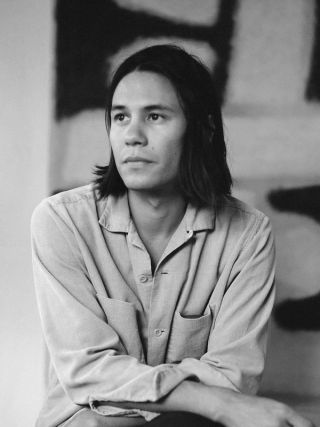
Spanning minimalist presentations and classical still lives, painter John Zabawa is not married to any school or style – instead, he seeks the best way to convey his message, to express something of himself and his process.
Related exhibitions
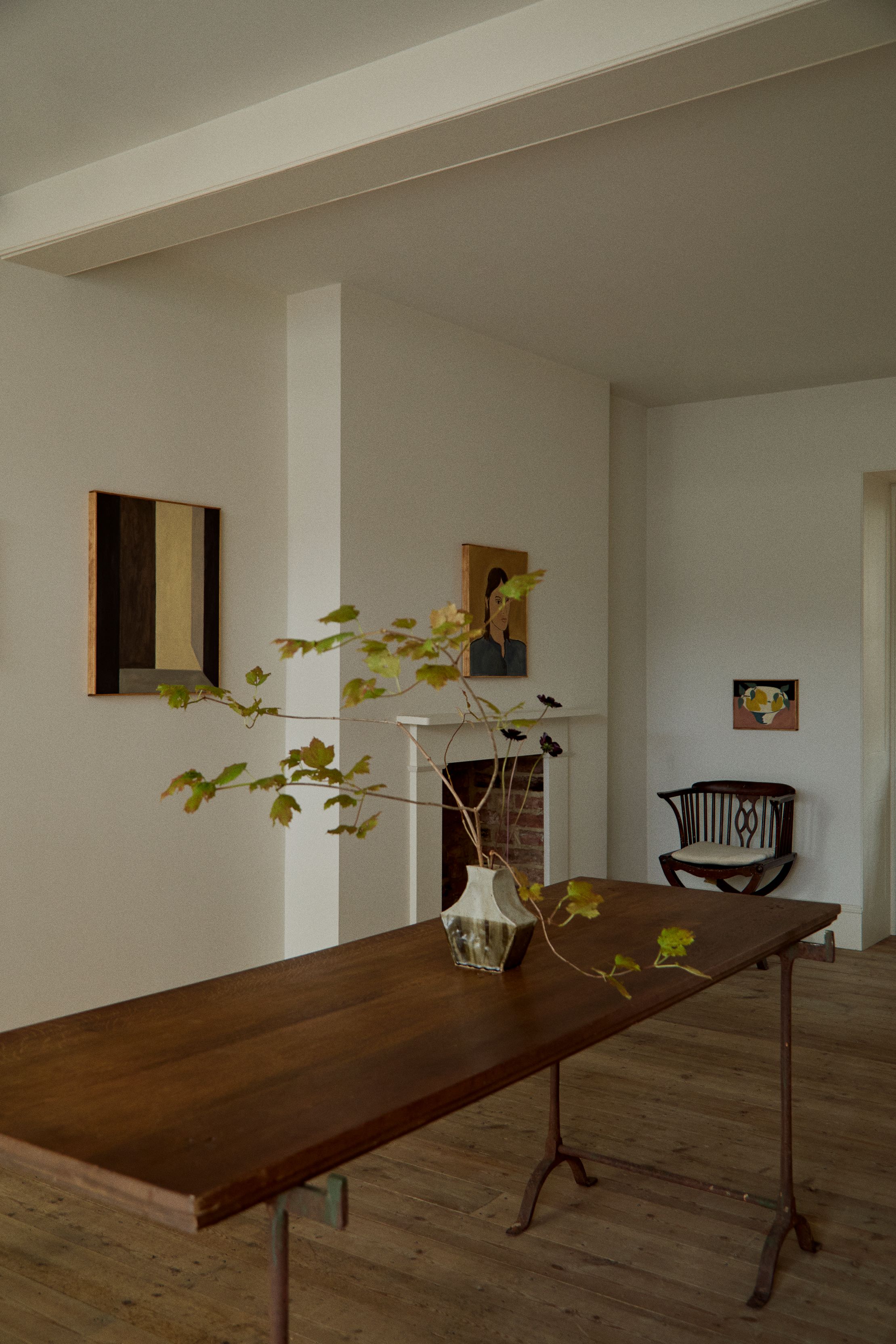
It is a hot, late September morning—quite typical of early autumn in California, but still tangibly at odds with the deepening quality of the light. I thread between lived-in Echo Park residences to climb the narrow stairs to John Zabawa’s studio, a small converted two-bedroom house that fits neatly within the domestic vernacular of the neighborhood. A pot is boiling on the stove of the kitchenette to make a cup of tea. Somehow, this detail, however slight, feels essential to the context—the paintings that rim the rooms are small domestic scenes: a flower arrangement, a plant, a portrait of a friend, a plate of lemons, a bottle of wine flanked by two half-filled glasses. Perched on a disused radiator, a platter holds nine lemons, unfussily arranged, their peels beginning to tarnish slightly the way peels do when left to the elements.
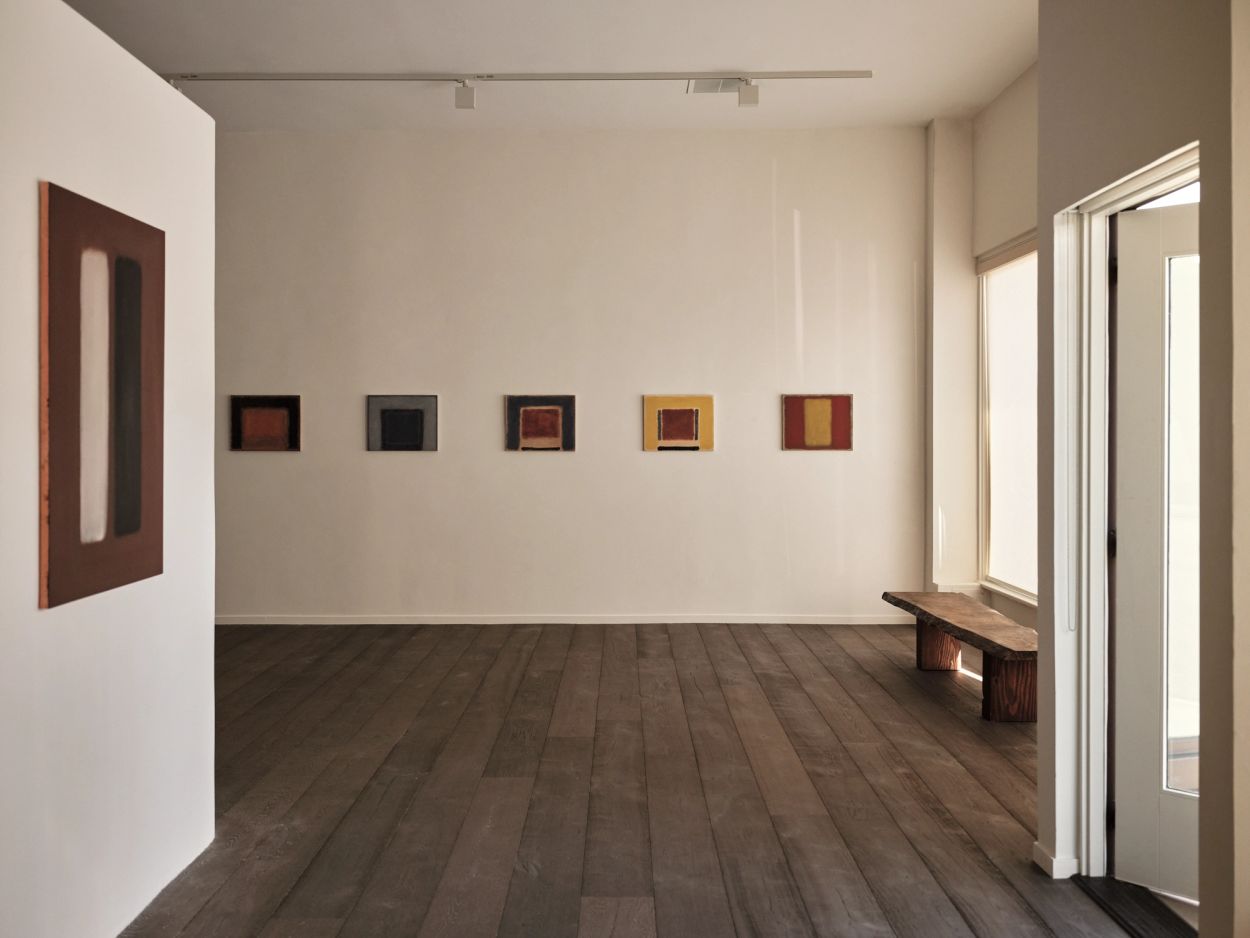
Illuminations can be both literal and metaphorical; one can illuminate with light or with knowledge. The latest body of work by the American painter, John Zabawa, developed out of this double meaning, their painted surfaces radiate outwards, their colours shimmering like the edges of the sun.
 Bath Gallery
John Zabawa: Gateways Apr 15 – Jun 19, 2021
Gateways is Los Angeles-based artist John Zabawa’s first solo show in the UK, featuring 24 oil paintings on canvas and wood. Their warm colours and abstract forms embody two branches of Zabawa’s art practice: a conceptual series of diptychs, and more figurative works, such as still life compositions of geometric fruit bowls and plants.