Nicolas Lefebvre: Fragments of EternityMay 1 – Jun 25, 2026
The 20th century critic Walter Benjamin believed that fragments carry the full weight of the whole. Within a sliver of ancient ceramic, the civilization that produced it, within a polished piece of coral, the entire reef. Like a mosaic, each tessera is both part and total. The artist Nicolas Lefebvre has a similar view of the artifacts he collects and composes. Traveling the world since childhood—through West Africa and the Peruvian highlands, coastal Portugal and India—he finds natural and man-made objects that suggest the existence of a greater whole, one that exceeds continents, cultures, and ages. By combining the discrete parts into resonant, unified sculptures, he points to what he’s called our collective memory: the symbolic inheritance that binds humans across space and time.
Part of this ethos stems from a recurring observation that, whether he is in a Saharan souk or a Parisian flea market, he encounters the same signs, forms, and configurations. Ankhs and orbs, obelisks and totems, trilogies and stacks, among them. To see his global compendium in one room is to see across the span of a species how similarly meaning is made. Transfixed by the same mysteries, distant civilizations, for all their distinctions, have drawn similar conclusions using similar means and materials. Nor does this kinship end for him with the human. He too introduces organic forms like shells, wood, fur, fossils, bone—a reminder, perhaps, of our common origin. Water, wind, salt, fire, and time have shaped us each from each.
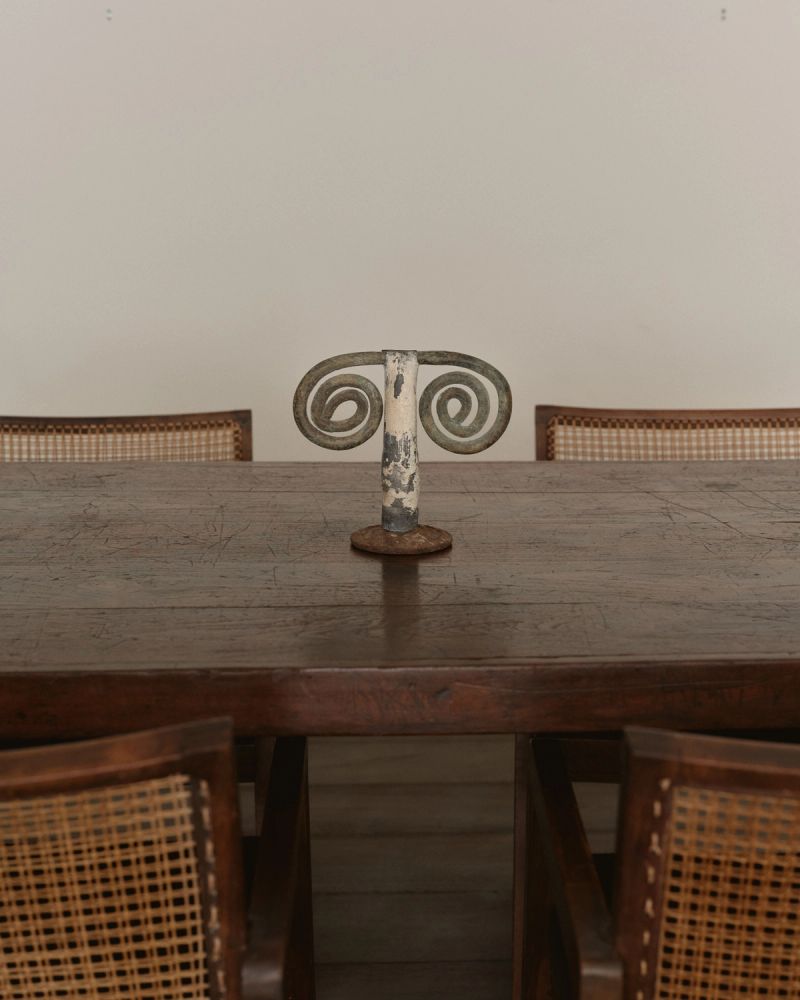
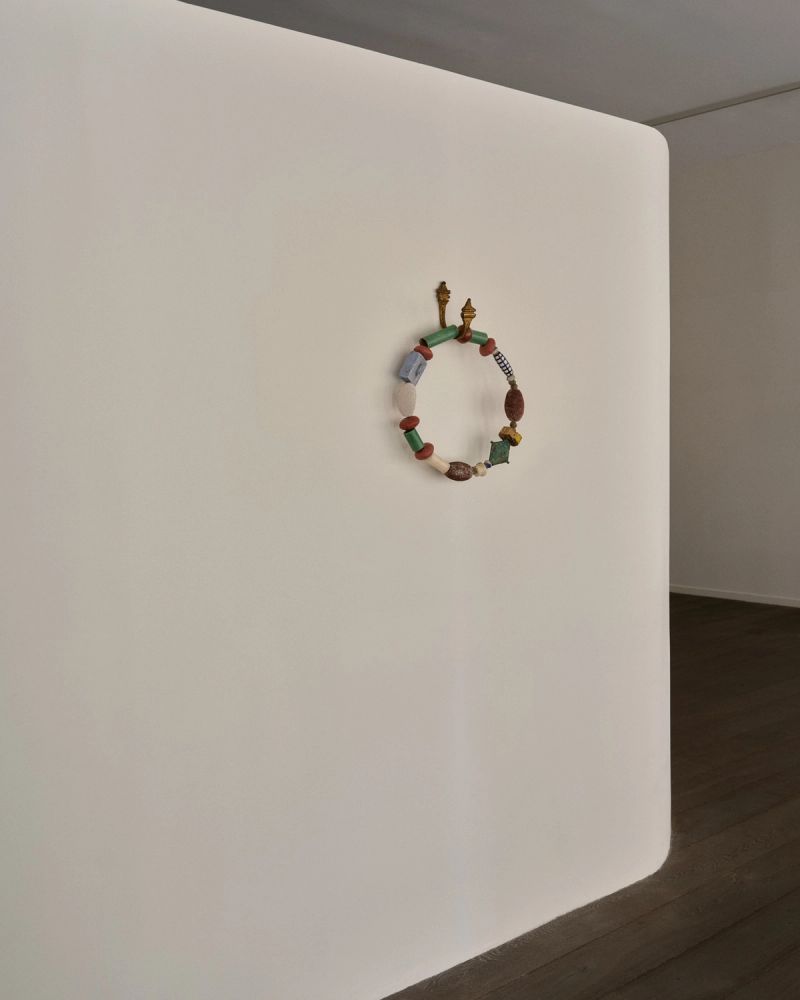
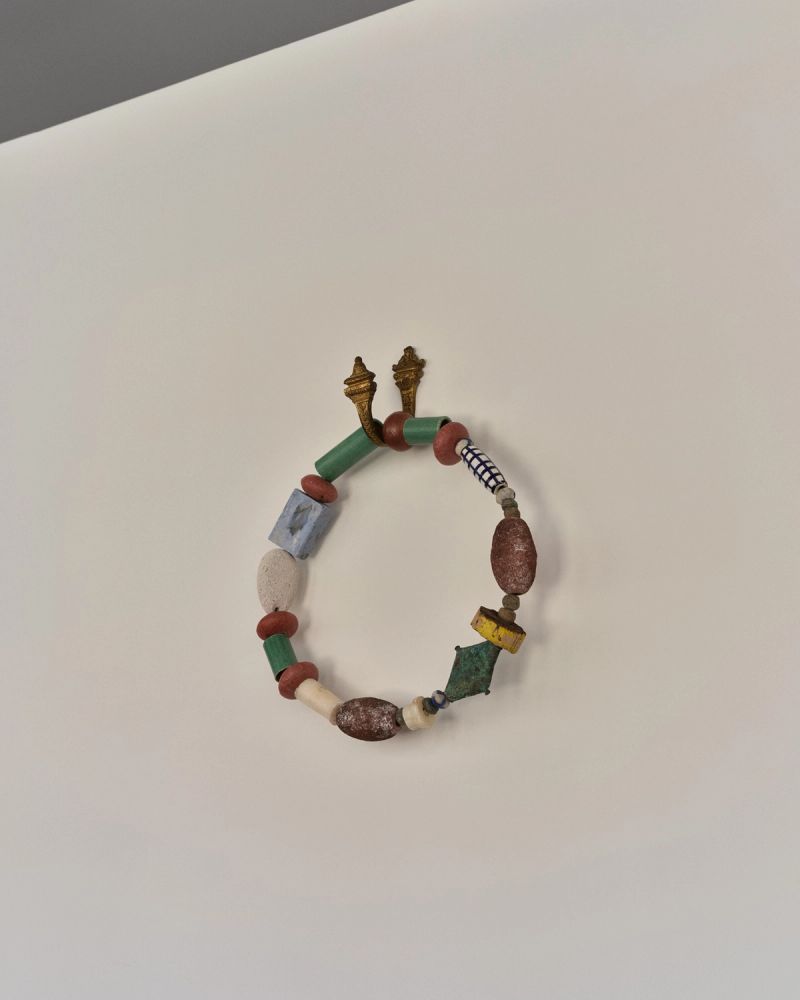
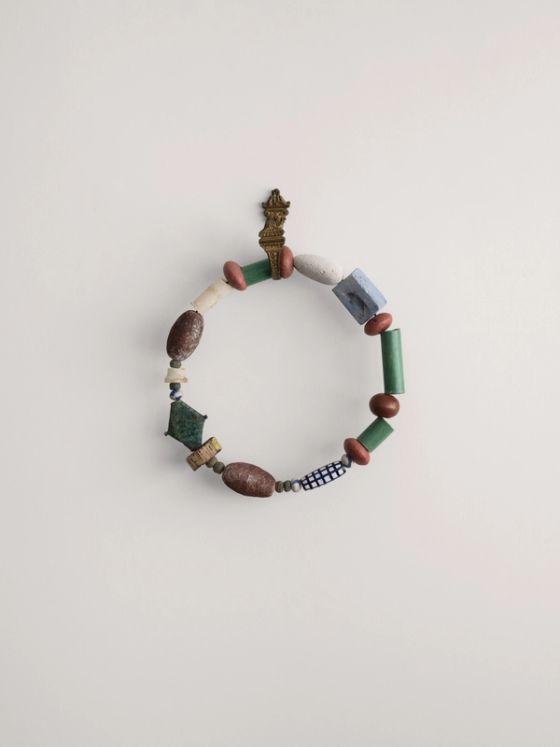
It’s for this reason that both the selection of each relic and its assembly are, for the artist, deeply intuitive acts. They speak to him, he says, and they speak to one another. His part in wedding the disparate pieces together—as various as Khmer mirrors, conchs, pre-Columbian ceramics—he hopes is invisible, and that the resulting work appears inevitable: from anywhere and everywhere. Luso, a necklace-like circle of pearls from Tahiti, stone from Portuguese fishermen, and turquoise from a 19th century cuff, describes this infinite flow of influence and interdependence. The twin spirals in Orus, crafted from antique bronze, lead, and metal, complete the same unbroken circuit.
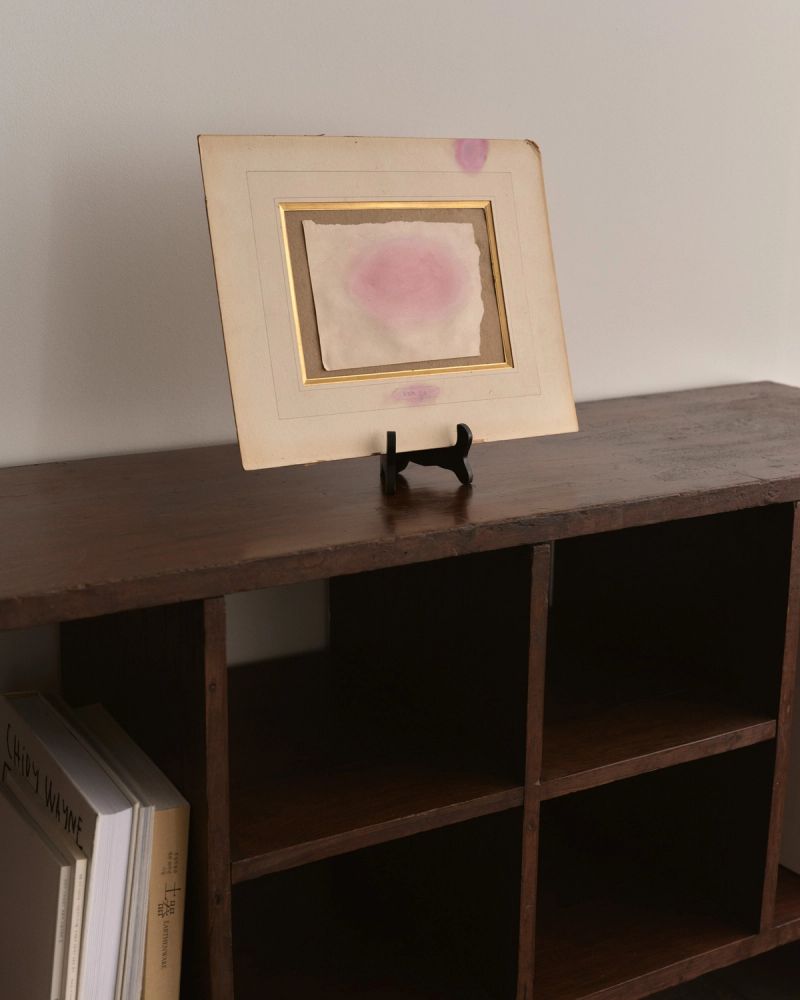
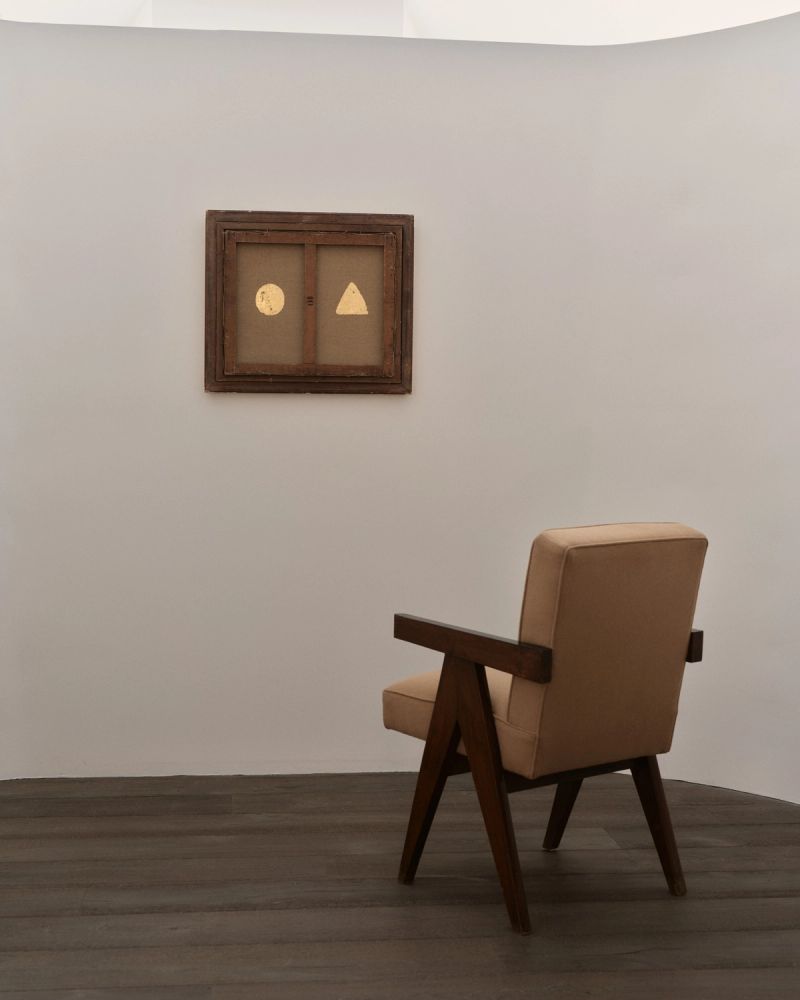
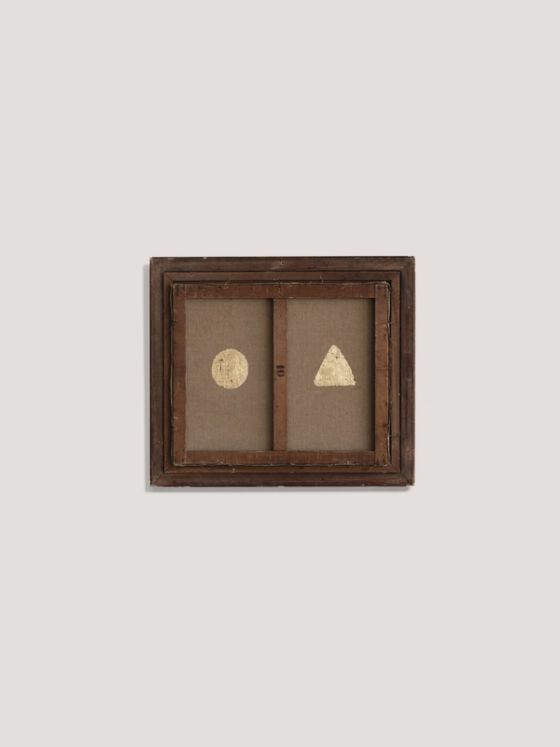
Past and present are similarly collapsed in his new series of paintings, shown here for the first time. Working on the verso of canvases collected by his grandparents, he uses metal, paper, and paint to surface what was previously hidden. In Cloud of Love, Twombly-esque flurries of oyster pink paint bloom across the matting and wood backing. With Luxor, he renders a circle and a triangle—a sun and mountain, a man and a woman, humanity and the divine—in gold leaf on the raw linen stretched between a worn and ragged frame. The inherited image, a private fragment from his familial archive, now faces the wall. The artist’s universal language is brought to the fore in a kind of translation or expansion of signification and meaning.
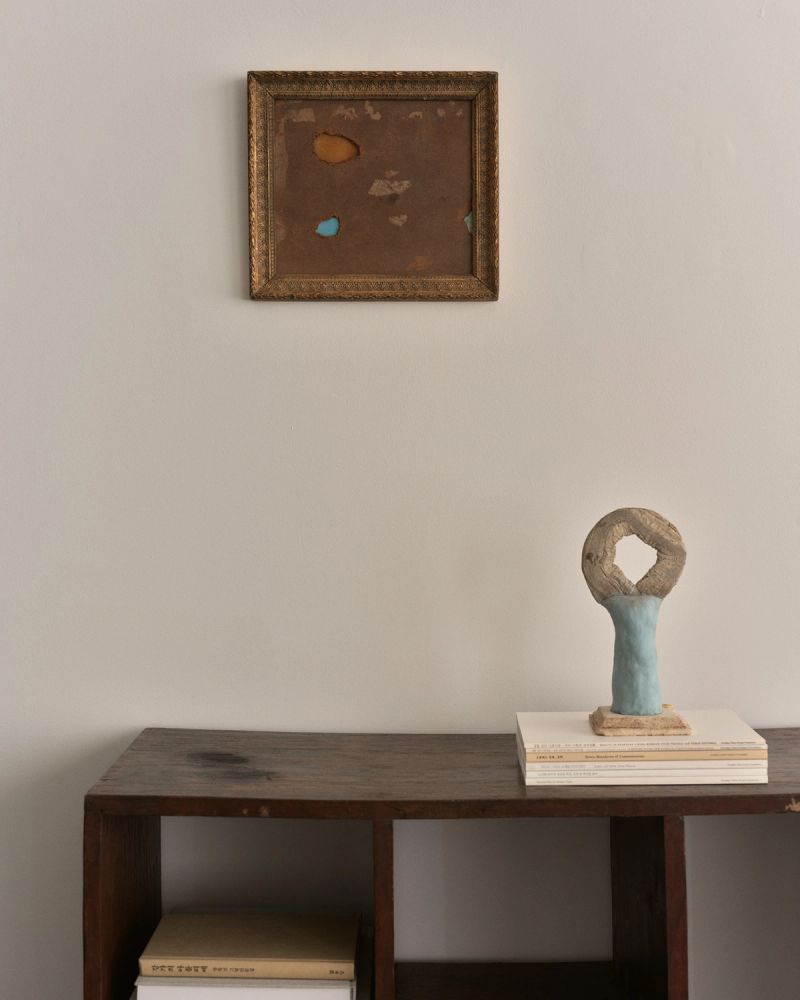
The personal and the universal are never far apart in Lefebvre’s practice. His mother’s death and the birth of his daughter arrived in close succession, an experience that precipitated a turn toward the feminine. The mother goddess recurs across his sculpted and painted forms: in lunar arcs, curvilinear vessels, rotund bodies reminiscent of Venus figurines, and intimate groupings of three that gesture toward the family. Odyssey, for instance, with its radial terracotta ring, handcrafted cerulean-painted shaft, and marble base, emphasizes the aspect of the crux ansata, or key of life, that symbolizes the womb, fertility, and the promise that after darkness, light, and with it new life, ascends.
Benjamin once wrote that fragments of a vessel glued together must match one another in the smallest details, although they need not be like one another. It is as apt a description of Lefebvre’s practice as any. Fragments of Eternity holds these two truths simultaneously: the singularity and the universality, the particularity of each piece, and the vast history it carries within. Before his work, one feels the pressure of that paradox, how small we are, yet how much we contain. How far we’ve come, and how precisely we’ve arrived exactly here, now.
Words
- Tara Anne Dalbow
Photos
- Rich Stapleton
Featured works
 LA Gallery
Nicolas LefebvreLuxor, 2026
 LA Gallery
Nicolas LefebvreLuso, 2026
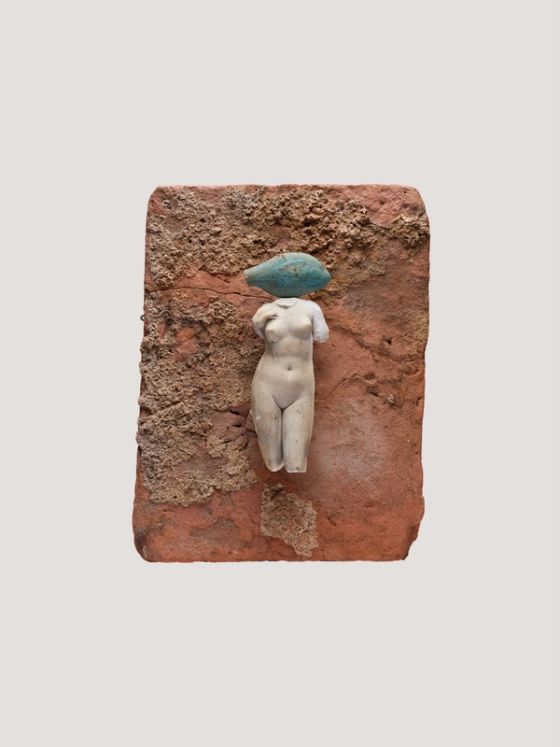
 Off-site
Nicolas LefebvreNusch, 2025
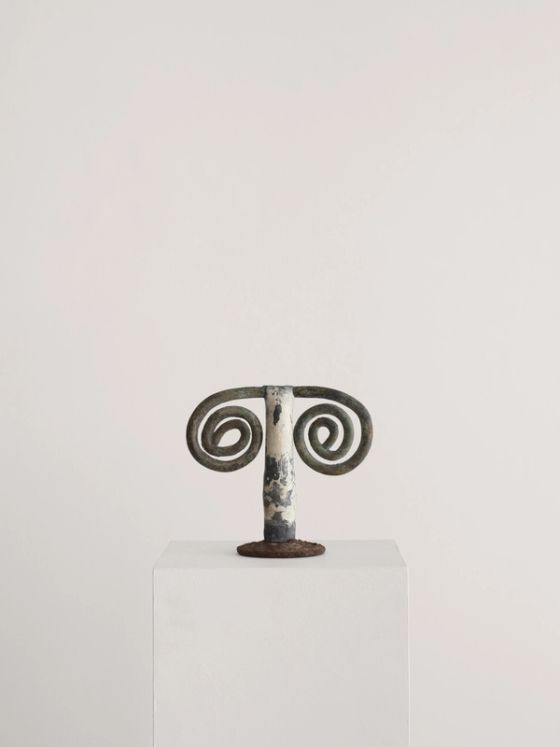
 LA Gallery
Nicolas LefebvreOrus, 2022
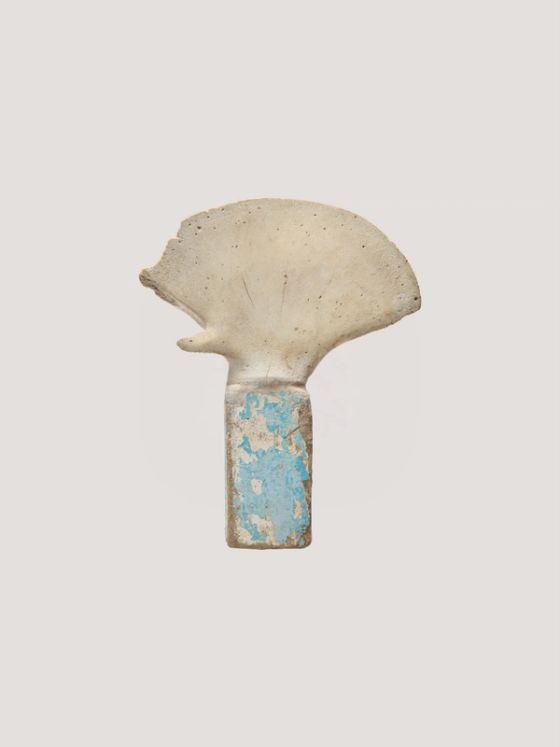
 Off-site
Nicolas LefebvreSal, 2024
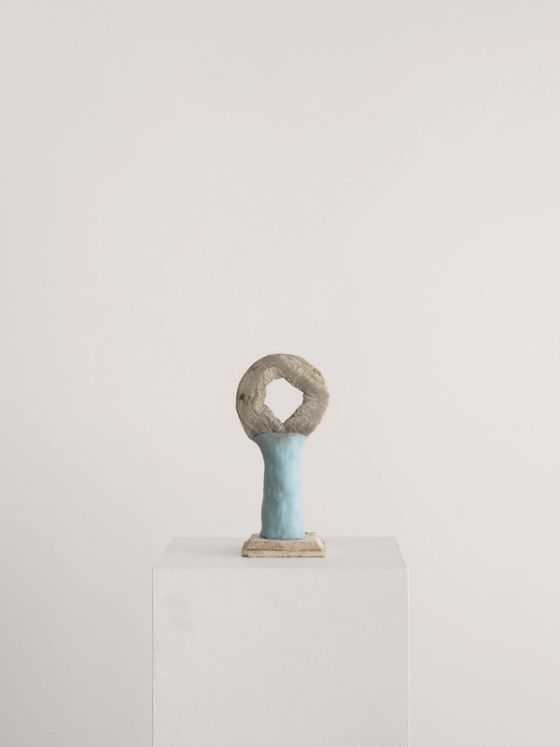
 LA Gallery
Nicolas LefebvreOdyssey, 2024
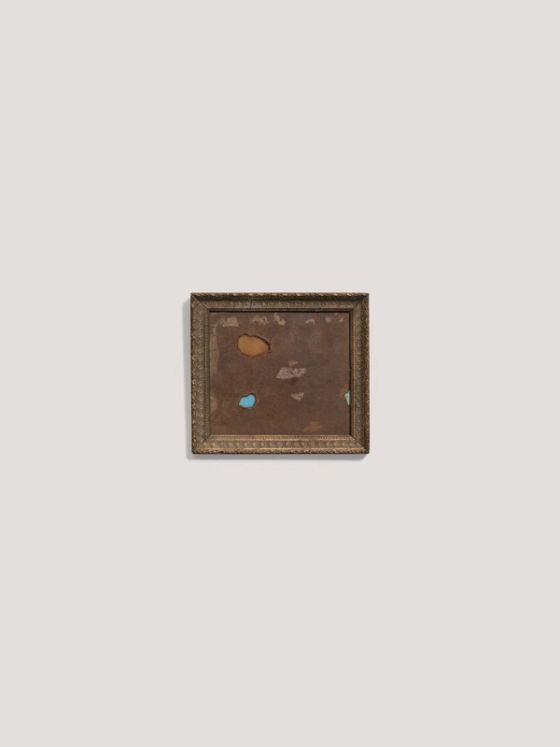
 LA Gallery
Nicolas LefebvreMaestro, 2025
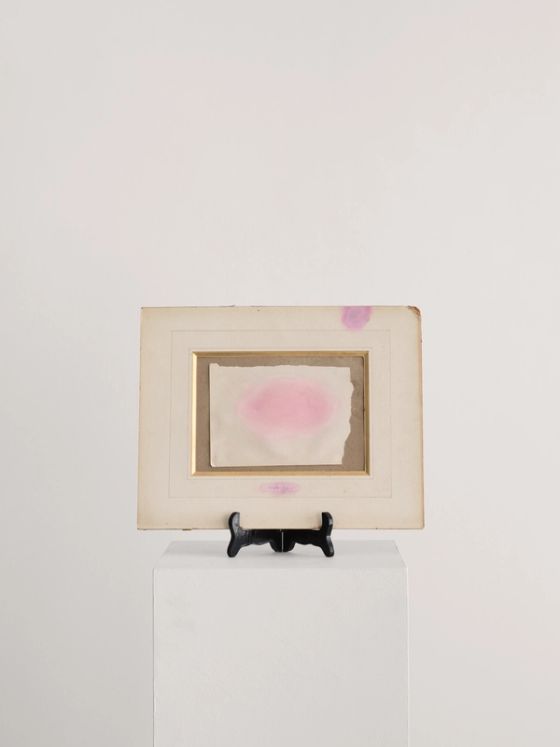
 LA Gallery
Nicolas LefebvreCloud of Love, 2024
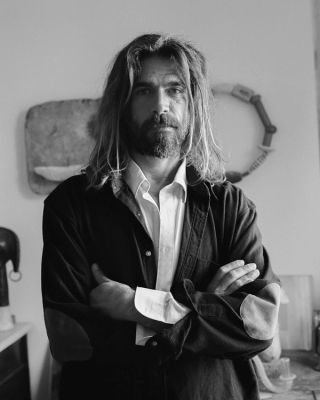
A self-taught artist, Lefebvre situates his work within the spirit of the Dada cabinet — embracing the unexpected as both setting and method. Drawn to the sacred, he builds a language of organic and crafted forms, weaving together the precious and the natural in compositions centred on the Egyptian ankh.